
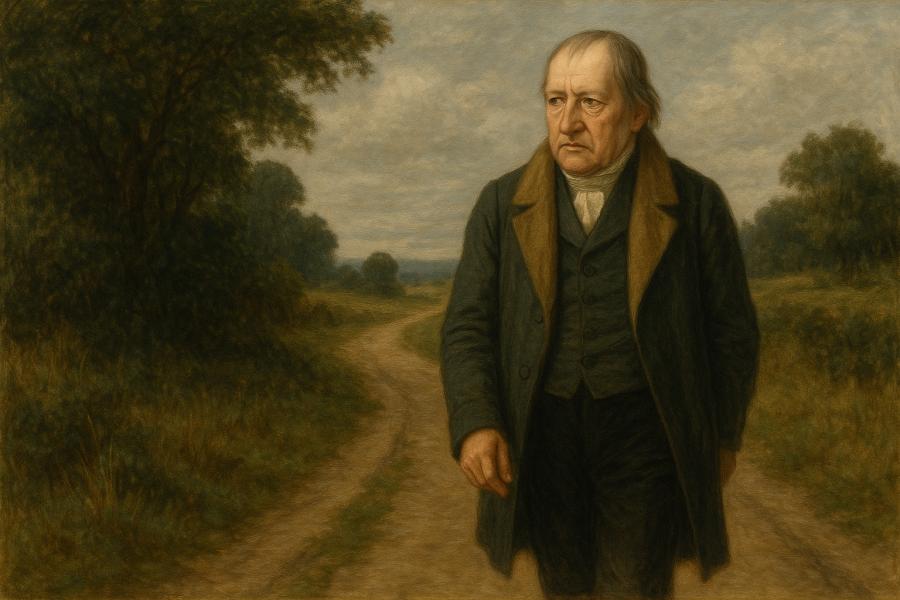
There is something that reveals more than a person's words. It is their 'attitude'. Attitude is not just a way of behavior, but like a mirror that reflects a person's existence and philosophy entirely. Philosophers have long considered attitude as the essence of human existence.
For Kant, attitude is the expression of moral autonomy. He saw humans as beings who establish laws for themselves based on reason, not desires. Therefore, he said that good actions are not good because of the positive outcomes, but because they stem from the correct attitude derived from duty. Goodness starts from an inner decision, not from the outcome.
Heidegger understood attitude as 'openness' towards existence. He pointed out that in the age of technological civilization, when humans treat the world merely as 'usable resources,' they lose the truth of existence. An open attitude means facing the world as it is, not just as a tool, and listening to it. He emphasized that true thinking begins from an attitude that fully accepts existence.
Sartre viewed attitude as the practice of freedom. He believed that humans are not confined within a given essence but are beings who create themselves. Therefore, taking responsibility for one's choices is the true form of being human. Conversely, repeating self-deception or excuses is an attitude that turns away from freedom.
Habermas defined attitude as communicative rationality. He believed that society can mature further when individuals engage in dialogue not to persuade or dominate others but to understand each other. He argues that an open attitude and a listening posture are essential foundations for a democratic society.
In Eastern thought, attitude also holds a central place in life. Confucius emphasized 'propriety' and 'sincerity,' while Mencius stressed 'compassionate consideration.' This signifies an attitude that combines sincerity and empathy. The teaching is that human dignity is completed only when the mind and actions become one.
Attitude is the foundation of ethics and a criterion of humanity. When inner beliefs align with outward actions, we call it authenticity, but when one pretends to be moral outwardly while pursuing only self-interest, it is called hypocrisy.
An attitude that acknowledges differences is tolerance, while an attitude that rejects others is narrow-mindedness. Openness to accepting new ideas is a virtue of cognition, and clinging only to convictions and closing oneself off leads to building walls of ignorance.
A person who endures disadvantages for the sake of truth is considered brave, while one who chooses silence and avoidance is deemed cowardly.
Ultimately, attitude is our own choice, and these choices build our individual philosophy. The dignity of a person is determined by how they view the world, treat others, and take responsibility for themselves.
Attitude is not just the person's words, but the person's existence itself.
그 사람의 철학, 태도
사람의 말보다 더 많은 것을 드러내는 것이 있다. 바로 '태도'다. 태도는 단순히 행동의 한 방식이 아니라, 한 사람의 존재와 철학이 오롯이 드러나는 거울과도 같다. 오래전부터 철학자들은 태도를 인간 존재의 핵심으로 여겼다.
칸트에게 태도란 도덕적 자율성의 표현이다. 그는 인간이 욕망이 아니라 이성에 따라 스스로 법을 세우는 존재라고 봤다. 그래서 선한 행동이란 결과가 좋은 것 때문이 아니라, 의무에서 비롯된 올바른 태도에서 나오기 때문에 선하다고 했다. 선함이란 성과의 문제가 아니라, 내면의 결단에서 시작된다는 뜻이다.
하이데거는 태도를 존재에 대한 '열림'으로 이해했다. 그는 기술문명의 시대에 인간이 세계를 단지 '이용할 수 있는 자원'처럼 대할 때, 존재의 진실을 잃게 된다고 지적했다. 열린 태도란 세상을 도구가 아니라 있는 모습 그대로 마주하며, 경청하는 자세를 말한다. 존재를 온전히 받아들이는 태도에서 진정한 사유가 시작된다는 점을 강조했다.
사르트르는 태도를 자유의 실천이라고 보았다. 인간은 주어진 본질 안에 갇혀 있지 않고, 스스로 자신을 만들어가는 존재라는 것이다. 그래서 자신의 선택에 책임을 다하는 태도야말로 진정한 인간의 모습이다. 반대로 자기기만이나 변명만 반복한다면 그건 자유를 외면한 태도라고 할 수 있다.
하버마스는 태도를 소통적 합리성으로 정의했다. 타인을 설득하거나 지배하려 하지 않고, 서로 이해하기 위해 대화할 때 사회가 한층 더 성숙할 수 있다고 본 것이다. 열린 태도와 경청하는 자세가 민주사회에 꼭 필요한 바탕이 된다고 말한다.
동양 사상에서도 태도는 삶의 중심에 있다. 공자는 '예'와 '성', 맹자는 ‘측은지심’을 강조했다. 이는 진정성과 공감이 어우러진 태도를 의미한다. 마음과 행동이 하나가 될 때 비로소 인간의 품격이 완성된다는 가르침이다.
태도는 도덕의 근본이며, 인간다움의 기준이기도 하다. 내면의 신념과 겉으로 보이는 행동이 일치하면 우리는 이를 진정성이라 부르고, 겉으로만 도덕적인 척하며 이익만을 추구할 때는 위선이라 한다.
서로의 다름을 인정하려는 태도는 관용이고, 타인을 배척하려는 태도는 편협함이다. 새로운 생각을 받아들이려는 개방성은 인식의 덕목이며, 확신에만 매달려 자신을 닫아버리면 무지의 벽을 쌓게 된다.
진실을 위해 불이익을 감수하는 사람은 용감하다고 불리고, 침묵과 회피를 선택하는 이는 비겁하다고 평가받는다.
결국 태도는 우리 스스로의 선택이며, 그 선택들이 쌓여 한 사람만의 철학을 만들어간다. 우리가 어떤 시선과 태도로 세상을 바라보고, 타인을 대하며, 자신에게 책임을 지느냐에 따라 인간의 품격이 결정된다.
태도는 단지 그 사람의 말이 아니라, 그 사람의 존재 그 자체다.