
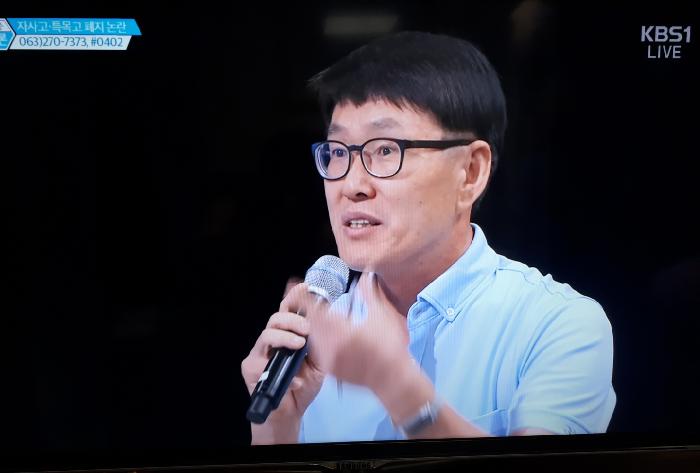
 Kwun Hyeok-seon
Consultant, Jeonbuk Regional Education Committee
President, Korean Association of Secondary School Senior Teachers
Former Representative, Jeonbuk Education Research Institute
I earnestly hope for a candidate for the 10th elected Jeonbuk Superintendent of Education. What is the most important thing in the school field? Management administration and student welfare are, of course, very important. However, even more crucial is the activation of practical teaching and research activities such as lesson sharing and reflection, consulting, and support for teaching innovation.
The space where students' academic growth and basic learning abilities are enhanced is the classroom where teachers and students interact. For administration and welfare to shine properly, the classroom must be alive. In order to ensure basic academic skills, it is essential to diagnose the causes of learning deficiencies based on the expertise of teaching, design customized educational programs and teaching methods for students, and have the capacity to provide customized consulting. However, the reality is focusing on quantitative education that is the opposite. This is why it is difficult to guarantee basic academic skills. To solve the problem of private education, it is necessary to go beyond simple slogans and emphasize the activities of teaching professionals that promote public education through the solidification of classroom teaching.
Reflecting on such reality, Article 20 of the Elementary and Secondary Education Act states that "Senior teachers support teachers' teaching and research activities and educate students." The legal basis has already been established. One senior teacher should become the educational support system of a unit school to establish a system that allows them to design and operate and evaluate teaching models. The roles of the provincial education office, educational training institute, and educational support office are important, but activities of the educational community in unit schools and teacher-led teaching innovations tailored to the classroom environment of schools must be institutionally supported. As of the second half of 2025, in Jeonbuk, there are 3 senior teachers for kindergartens, with one senior teacher assigned to 153 schools. For elementary schools, there are 22 senior teachers, with one for every 19 schools, 14 for middle schools, one for each of the 14 schools, and 15 for high schools, one for every 9 schools. Considering the rapidly changing educational environment focusing on core competencies such as critical thinking, collaboration skills, smart device utilization, AI digital education, and diverse integrated education, these numbers are very insufficient. Especially in rural areas with many new and inexperienced teachers and lacking educational welfare benefits, the role of senior teachers is even more necessary.
To prevent the role of senior teachers from being limited to mere 'activity support,' a standard should be established clearly outlining the authority and responsibilities for school support tasks. This will help create schools centered around teaching and research activities that satisfy both senior teachers and members of the educational community. In order to activate teacher-led teaching innovation and practice, senior teachers should first select innovative certified teachers such as spring teachers, growth teachers, and achievement teachers as senior teachers, allowing young teachers with excellent teaching and research skills to prioritize the path of 'teaching and research' rather than 'management administration.'
Article 19 of the Elementary and Secondary Education Act states that "... schools shall have a principal, vice principal, senior teacher, and teachers." However, considering the legislative situation where the standards and deployment criteria have not been established by presidential decree, it is necessary to secure the legal quota of senior teachers and establish a legal basis to clearly define deployment criteria. This will ensure that teachers who excel in teaching become the best and are favored in the educational atmosphere. Only then can education in Jeonbuk thrive.
[권혁선 칼럼] 수업을 잘하는 수석교사가 우대받는 전북교육을 희망합니다
권혁선
전북지역공동 교육위원회 자문
한국중등수석교사회 회장
전) 전북교육공동연구원 대표
제10대 민선 전북 교육감 입후보자에 간절히 바란다. 학교 현장에서 가장 중요한 것은 무엇일까? 관리 행정도 학생 복지도 물론 매우 중요하다. 그러나 더욱 중요한 것은 수업 나눔과 성찰, 컨설팅·수업 혁신 지원 등 실천적 교수·연구 활동의 활성화이다.
학생의 학력 신장과 기초 학습 역량이 향상되는 공간은 교사와 학생이 함께하는 교실이다. 교실이 살아야 행정도 복지도 제대로 빛을 발휘할 수 있다. 기초학력을 보장하기 위해서는 수업의 전문성을 바탕으로 학습 부진의 원인을 진단하고 학생 맞춤형 교육과정과 교수법을 설계하면서 맞춤형 컨설팅을 할 수 있는 역량을 가진 교원의 역할이 절대적으로 필요하지만, 현실은 정반대의 양적인 교육에 치중하고 있다. 기초학력 보장 학습이 어려운 까닭이다. 사교육 문제를 해결하기 위해서는 단순한 구호를 넘어, 교실 수업의 내실화를 통한 공교육 활성화를 위한 수업 전문가의 활동이 더욱 필요하다.
위 같은 현실을 반영하여 초중등교육법 제20조(교직원의 임무)에서는 ‘수석교사는 교사의 교수·연구 활동을 지원하며, 학생을 교육한다.’라는 법 규정을 마련했다. 법적 기반은 이미 마련되어 있다. 수석교사 1명이 단위 학교의 교육지원청이 되어 수업 모델의 설계와 운영·평가의 주체가 될 수 있도록 제도적 기반을 구축해야 한다. 도 교육청, 교육연수원, 교육지원청의 역할도 중요하지만, 단위 학교에서의 교육공동체 활동과 학교의 교실 환경에 맞는 교사 주도의 수업 혁신이 제도적으로 뒷받침되어야 한다. 현재 전북에는 2025년 하반기 기준, 유치원 수석교사는 3명으로 153교당 1명의 수석교사가 배치되어 있다. 초등학교 수석교사는 22명으로 19교에 1명, 중학교는 14명으로 14개에 1명, 고등학교는 15명으로 9교에 1명의 비율로 수석교사가 배치되어 있다. 비판적 사고, 협력 능력 등 핵심 역량 중심 교육, 스마트 기기 활용 AI 디지털 교육, 다양한 교과 연결 융합 교육 등으로 급격하게 변하고 있는 교육 환경을 고려하면 매우 부족하다. 특히, 신규 저경력 교사가 많고 교육 복지 혜택이 부족한 읍면 단위를 중심으로 수석교사의 역할이 더욱 필요하다.
아울러 수석교사의 역할을 단순 ‘활동 지원’에 한정되는 현상을 막기 위해 학교 지원 업무에 대한 권한과 책임을 명확하게 설계한 표준안을 마련하여 수석교사와 교육공동체 구성원 모두가 만족하는 교수·연구 활동 중심 학교를 만들어야 한다. 교사 주도의 수업 혁신과 실천을 활성화하기 위해 현재 해봄교사, 성장교사, 이룸교사의 수업혁신 인증교사를 수석교사로 우선 선발하여 우수한 교수·연구 활동 역량을 가진 젊은 교사들이 ‘관리 행정’이 아닌 ‘교수·연구’의 길을 우선 선택하도록 선택의 폭을 다양하게 해야 한다.
초중등교육법 제19조(교직원의 구분)에서는 ‘…… 학교에는 교장·교감·수석교사및 교사를 둔다.’고 규정하고 있으나 대통령령에 의한 정원·배치 기준이 마련되지 못한 입법부작위 상황임을 고려하여 수석교사의 법적 정원을 확보하고 배치 기준을 명확하게 할 수 있는 법적 기반을 마련하여 수업 잘하는 교사가 최고가 되어 우대받는 교육풍토를 반드시 만들기 바란다. 그래야 전북 교육이 살 수 있다.