
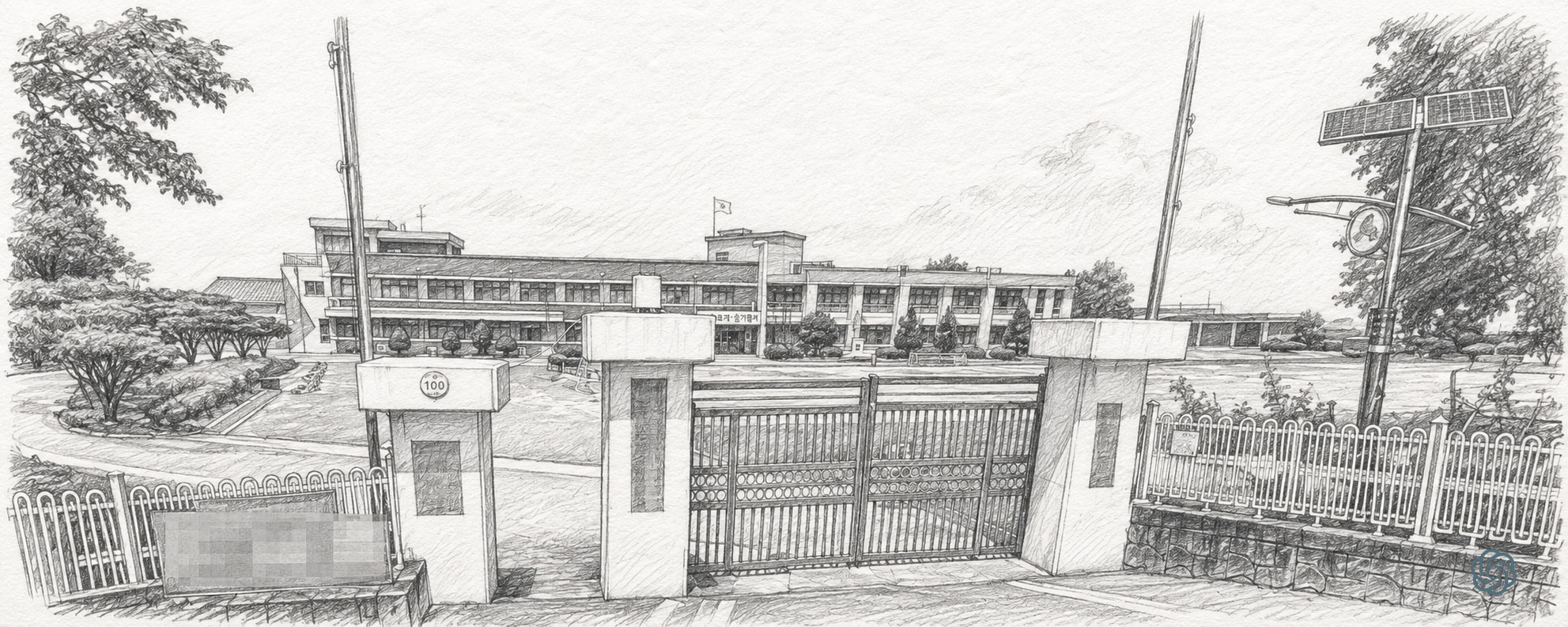
The incident that took place in a 6th-grade classroom at M Elementary School in Jeonju was not just a simple conflict between a teacher and parents. At its core were two students who became fearful of the school. The decision of non-indictment by the Jeonbuk Provincial Police Agency on June 4, 2026, regarding two parents is now shedding light on the 'malicious complaints' frame that had been surrounding the case.
The police concluded that there was insufficient evidence to support any of the charges of obstruction of official duties, obstruction of hierarchical official duties, defamation, and honor infringement against parents A and B. The criminal frame of 'malicious complaints' that the teacher's side had been claiming has not been proven by the investigative agency's judgment.
This decision is not just a document determining the criminal responsibility of the two parents. It serves as a starting point to revisit what actually happened in the 6th-grade classroom at M Elementary School, who was not protected, and why the children became fearful of the school.
Teacher who reported parents becomes homeroom teacher
The core of the incident begins with the homeroom assignment for the new school year in 2025.
Teacher C reported the mothers of two students in December 2024. Subsequently, it was revealed that he applied for a transfer to M Elementary School on his social media, stating that if there were no competitions, he would likely become the homeroom teacher of the so-called 'PD Notebook class.'
The sequence of events is crucial. Explaining that "Teacher C became the homeroom teacher because there were no other teachers willing to take on the role" could obscure the essence of the incident. What happened first was Teacher C's expression of interest in becoming the homeroom teacher. In a situation where a teacher who had reported parents publicly volunteered for a transfer to the school and declared himself as the homeroom teacher of that class, it would have been very difficult for other teachers to apply for that homeroom position.
However, Teacher C's side has a different stance on this. During the police investigation, Teacher C stated, as recorded in the police decision document, that "the genuine (parents) children had experienced their homeroom teacher changing six times the previous year, so I applied to M Elementary to teach those children well." He also claimed that he had filled out a homeroom assignment application, and the appointment was made through the Jeonju Education Support Office, and the homeroom assignment was done through the School Personnel Advisory Committee and the principal. Teacher C's position is that his application for the homeroom position was not intended to disadvantage the parents' children.
Ultimately, the teacher who reported the parents became the homeroom teacher of the 6th-grade classroom where the parents' children were. The question of whether this assignment was educationally appropriate, and whether the legal conflict among adults entered the children's classroom, still remains.
Child called the police directly
In March 2025, at the start of the new school year, two students entered the 6th-grade classroom and were shocked to see the face of their homeroom teacher. The person standing at the podium was the teacher who had reported their mothers to the police.
Subsequently, the children found it difficult to even enter the classroom. One student hid in their mother's car trunk and refused to come out, while B's child directly reported to the police by pressing the smartwatch during class.
The police non-indictment decision clearly records the events of the police dispatch to the school on March 17, 2025.
"On the same day, in the morning, B's child student reported first using a smartwatch, and the police officer dispatched to the scene concluded the incident."
This can be seen as meaning that the child felt such fear that they called the police themselves during class. The incident reported by the parents via text was handled as a 'non-dispatch' where the police did not respond. Instead, the school took actions such as reporting the parents of a student who was in the gym due to fear of entering the classroom for child neglect.
Furthermore, in the decision document, the police officers collectively stated, "There is no fact that the police officers' official duties were obstructed." Therefore, claims such as "classes were disrupted every time there was a report" or "parents obstructed school operations through police intervention" are far from the police's judgment. The teacher and the school claimed that there were delays in police responses during official duties, but the police deemed that there was insufficient evidence to acknowledge obstruction of official duties.
Not all teachers were feared
So, did the two students fear all teachers and school life in the same way? Not quite.
B's child transferred to another school and entered middle school. According to statements from the middle school officials, the homeroom teacher of that student evaluated the child as a model student. School administrators also informed other teachers who knew that B's parent was 'actively cooperating in school operations as a vice-chairman of the school operating committee.'
This indicates that the difficulty faced by this student did not stem from a fear of all teachers or school life in general. What the child feared was not the 'teachers in general' but the specific situation of having a teacher related to the Y Elementary Red Card issue and the teacher who reported their mother to the police as the homeroom teacher.
On the other hand, A's child, who could not transfer, suffered even more profound pain. The child suffered a head injury during a school physical activity, and their mental health, which had been improving, deteriorated again when the teacher who reported their parent became the homeroom teacher. As a result, the child underwent treatment, missed classes, and ended up being retained due to not fulfilling the required number of school days.
This section clearly demonstrates the essence of the incident. The problem was not that the students rejected school life in general. They could continue their school life in an environment where they felt safe. However, the classroom where a teacher who reported their parents became the homeroom teacher became a space of fear for the children, rather than a space of learning.
Scenes from the classroom in September's diary
Even as time passed, the child's anxiety did not disappear. One student wrote the following in their diary on September 16, 2025.
"I felt unjust because I was asked to solve the math unit test alone since I didn't take the graduation photo... During the English class, a KakaoTalk message saying 'How much does it cost to sue?' appeared on the electronic board, and the homeroom teacher hurriedly erased it."
The child's diary is not just a simple expression of emotions. It is a record showing what the child saw and felt in that classroom. It cannot be ignored whether the school was a safe space for the child, and whether the homeroom assignment was a decision that fully considered the student's emotions and right to learn.
In 2026, a 'homeroom unassigned' frame was created
Controversy continued during the homeroom assignment phase in 2026. The union related to Teacher C engaged in press conferences and protests under the assumption that no homeroom teacher would be assigned to the class at M Elementary. It was also reported that consent forms demanding administrative measures in case of 'homeroom vacancy' were sent to the candidates for the education superintendent.
However, in reality, a new homeroom teacher had already been assigned the day before the union sent out the aforementioned document. The union still sent the document assuming a 'vacancy in the homeroom' the day after the homeroom assignment was completed.
As a result, the 'homeroom unassigned' frame in 2026 turned out to be inconsistent with reality. With the actual homeroom assignment completed, the narrative of 'no one wanting to take on the class' that the union had been advocating lost its credibility.
What did the label 'malicious complaints' erase?
Teachers in elementary schools in Jeonbuk and educational organization executives have classified this incident as a problem of 'malicious complaints.' However, the police's decision of non-indictment at least shows that this frame was not proven in the criminal process.
Teacher C has stated, "I reported to protect educational activities from parents who engaged in baseless child abuse reports and malicious complaints." Such claims and actions by the teacher's side do not necessarily mean innocence in a criminal sense. However, it is a clear fact from the police investigation that the parents' actions were not recognized as criminal offenses.
Of course, educational activities of teachers should be protected. If a teacher is suffering from repeated complaints, it should be addressed institutionally. However, the pretext of protecting educational activities should not be used in a way that erases the fear and infringement of the students' right to learn.
What was erased in this case was the reality of the two students. One student transferred schools, and the other student, who could not transfer, experienced a worsening of mental health and absenteeism due to the teacher who reported their parents becoming the homeroom teacher. The questions of what psychological pressure the children felt in the classroom where the teacher who reported their parents became the homeroom teacher and why the school and education office did not foresee and prevent that danger have been pushed aside.
The term 'malicious complaints' is powerful. However, the more powerful the term, the more cautiously it should be used. If unconfirmed legal matters were labeled as malicious complaints and demanded that candidates agree to this labeling during an election period, it could lead to the politicization of education community recovery rather than resolving conflicts.
Protection of educational activities and student protection must go hand in hand
The events in the 6th-grade classroom at M Elementary School cannot be resolved by pitting the protection of educational activities against student protection. Teachers should be protected. At the same time, students should also be protected. The justification of one side's rights causing suffering to the other side should not be allowed.
Especially, the key point of this incident is that not all teachers were feared by the two students. One student continued their school life positively after transferring, while the other student, who remained without transferring, experienced a deterioration in mental health and retention due to the teacher who reported their parent becoming the homeroom teacher. This difference shows that the root cause of the problem was not the student's personal maladjustment but the inadequacy of the educational environment and homeroom assignment.
The Jeonbuk Education Office must now address this issue not merely as a controversy of infringement of educational authority or a conflict of complaints but delve into the 2025 homeroom assignment process, student protection measures, the factual circumstances of the 2026 homeroom unassigned frame, and the administrative responsibilities remaining after the police non-indictment decision.
What happened in the 6th-grade classroom at M Elementary School is becoming clearer. A teacher who reported parents became the homeroom teacher, and the children expressed fear. This fear was not about all teachers but was created in a specific context of homeroom assignment and subsequent school responses.
The police's decision of non-indictment is now urging a reexamination of this incident. It is necessary to confront the time lost in the students' transfer, treatment, retention, and fearful moments hidden behind the label of 'malicious complaints.' To restore the educational community, one must first ask why the children were not protected in that classroom.
M초 6학년 교실에서는 무슨 일이 일어났던 것일까?
경찰 불송치 결정으로 다시 드러난 '악성민원' 프레임의 균열과 두 학생의 고통
전주 M초 6학년 교실에서 벌어진 일은 단순한 교사와 학부모의 갈등이 아니었다. 그 중심에는 학교를 두려워하게 된 두 명의 학생이 있었다. 그리고 2026년 6월 4일 전북특별자치도경찰청의 두 학부모에 대한 불송치 결정은, 그동안 이 사건을 둘러싸고 제기됐던 '악성민원' 프레임을 다시 들여다보게 만들고 있다.
경찰은 학부모 A 씨와 B 씨에게 제기된 공무집행방해, 위계공무집행방해, 무고, 명예훼손 혐의 전부에 대해 증거 불충분으로 혐의 없음 판단을 내렸다. 교사 측이 주장해 온 '악성민원인'이라는 형사적 프레임이 수사기관 판단으로 입증되지 않은 것이다.
이 결정은 단순히 두 학부모의 형사책임 여부만을 가르는 문서가 아니다. M초 6학년 교실에서 실제로 무엇이 벌어졌는지, 누가 보호받지 못했는지, 왜 아이들이 학교를 두려워하게 되었는지를 다시 묻는 출발점이다.
부모를 고발한 교사가 담임으로 온 교실
사건의 핵심은 2025년 새 학기 담임 배정에서 시작된다.
C 교사는 2024년 12월 두 학생의 어머니들을 형사 고발했다. 이후 그는 자신의 SNS에 복직과 동시에 전주 M초로 전보를 신청했고, 경합이 없다면 이른바 'PD수첩 학급'의 담임이 될 것으로 예상한다는 취지의 글을 올린 것으로 알려졌다.
중요한 것은 순서다. "담임을 맡겠다는 교사가 없었기 때문에 어쩔 수 없이 C 교사가 담임이 됐다"고 설명하는 것은 사건의 본질을 흐릴 수 있다. 먼저 있었던 것은 C 교사의 담임 지원 의사였다. 이미 학부모를 고발한 교사가 해당 학교 전보와 해당 학급 담임을 공개적으로 자처한 상황에서, 다른 교사들이 그 학급 담임을 지원하기는 매우 어려웠을 가능성이 크다.
다만 C 교사 측은 이에 대해 다른 입장을 밝히고 있다. C 교사는 경찰 수사 과정에서 "진정인(학부모) 자녀들이 전년도에 담임교사가 6번이나 변경됐던 이력이 있어, 오히려 그 아이들을 잘 가르쳐 보기 위해 M초로 지원했다"고 진술한 것으로 경찰 결정서에 기재돼 있다. 또한 "담임 배정 희망서를 작성한 것이고, 발령은 전주교육지원청, 담임 배정은 학교인사자문위원회와 교장을 통해 이뤄진 것"이라고 주장했다. C 교사는 자신의 담임 지원이 학부모 자녀들에게 불이익을 줄 목적이 아니었다는 입장이다.
결국 부모를 고발한 교사가 그 부모의 자녀들이 있는 6학년 교실의 담임으로 들어왔다. 이 배정이 교육적으로 적절했는지, 어른들 사이의 법적 갈등이 아이들의 교실 안으로 들어온 것은 아닌지에 대한 질문은 여전히 남는다.
아이가 직접 경찰을 불렀다
2025년 3월 새 학기, 두 학생은 6학년 교실에 들어갔다가 담임교사의 얼굴을 보고 큰 충격을 받은 것으로 알려졌다. 교단에 서 있던 사람은 자신들의 어머니를 경찰에 고발한 교사였다.
이후 아이들은 교실에 들어가는 것 자체를 힘들어했다. 한 학생은 엄마 차 트렁크에 숨어 나오지 않았고, B 씨의 자녀는 수업 중 스마트워치를 눌러 직접 경찰에 신고했다.
경찰 불송치 결정서에는 2025년 3월 17일 경찰이 학교에 출동한 경위가 명확히 기록돼 있다.
"같은 날 오전에 B 씨의 자녀 학생이 (경찰청이 지급한) 스마트워치로 먼저 신고를 하여 경찰관이 현장 출동 후 종결"
아이가 수업 중 스스로 경찰을 부를 만큼 두려움을 느꼈다는 의미로 볼 수 있다. 학부모가 뒤이어 문자로 신고한 이 건은 경찰이 출동하지 않는 '비출동' 처리됐다. 오히려 학교는 병원 치료 중이거나 교실에 들어가는 것을 두려워 하며 운동장에 있던 학생의 부모를 아동학대 방임으로 신고하는 등의 행동을 했다.
한편, 결정서에서 경찰관들은 공통적으로 "경찰관 본인의 공무집행을 방해받은 사실이 없다"고 진술했다. 따라서 "신고가 있을 때마다 수업이 중단됐다"거나 "학부모가 경찰 출동을 통해 학교 업무를 방해했다"는 식의 단정은 경찰 판단과 거리가 있다. 교사와 학교 측은 경찰 응대 과정에서 업무가 지연됐다고 주장했으나, 경찰은 공무집행방해를 인정할 만한 증거가 부족하다고 판단했다.
모든 교사를 무서워한 것이 아니었다
그렇다면 두 학생은 모든 교사와 학교생활 자체를 똑같이 두려워했던 것일까. 그렇지 않다.
B 씨의 자녀는 이후 다른 학교로 전학했고 중학교에 진학했다. 중학교 관계자의 전언에 따르면 해당 학생의 담임은 아이를 모범생으로 평가한 것으로 알려졌다. 학교 관리자도 자신의 알고 지내는 다른 학교 교사에게 학부모 B 씨가 '학교운영위원회 부위원장으로서 학교 운영에 적극 협조하고 있다'고 전했다.
이는 해당 학생의 어려움이 모든 교사에 대한 공포나 학교생활 전반에 대한 거부에서 비롯된 것이 아님을 보여준다. 아이가 두려워했던 것은 '교사 일반'이 아니라, Y초 레드카드 관련 교사와 자신의 어머니를 형사 고발한 교사가 담임으로 배정된 특수한 상황이었다.
반면 전학을 가지 못했던 A 씨의 자녀는 더 깊은 고통을 겪었다. 학교 체육활동 중 이마를 찧는 부상을 당했고, 호전되어 오던 정신건강도 6학년에 올라 부모를 고발한 교사가 담임으로 부임하면서 다시 악화된 것으로 알려졌다. 결국 치료와 결석이 이어졌고, 수업일수를 채우지 못해 유급되는 상황까지 겪었다.
이 대목은 사건의 본질을 분명히 보여준다. 문제는 학생들이 학교생활 자체를 거부했다는 데 있지 않다. 안전하다고 느낄 수 있는 환경에서는 학교생활을 이어갈 수 있었다. 그러나 자신의 부모를 고발한 교사가 담임으로 들어온 교실은 아이들에게 배움의 공간이 아니라 두려움의 공간이 되었다.
9월의 일기장에 남은 교실의 장면
시간이 흘러도 아이의 불안은 사라지지 않았다. 한 학생은 2025년 9월 16일 일기장에 이렇게 남겼다.
"졸업 사진을 찍지 않은 나만 수학 단원평가를 풀라고 하니까 억울하다… 영어 시간에 전자칠판에 '고소 비용 얼마예요?'라는 카카오톡 메시지 내용이 올라왔고, 담임선생님이 황급히 지웠다."
아이의 일기는 단순한 감정 표현이 아니다. 그 교실에서 아이가 무엇을 보고, 무엇을 느꼈는지 보여주는 기록이다. 학교가 아이에게 안전한 공간이었는지, 담임 배정이 학생의 정서와 학습권을 충분히 고려한 결정이었는지 묻지 않을 수 없다.
2026년에는 '담임 미배정' 프레임이 만들어졌다
2026년 담임 배정 국면에서도 논란은 이어졌다. C 교사와 관련된 노조는 M초 해당 학급에 담임이 배정되지 않을 것이라는 위기감을 전제로 기자회견과 농성을 이어갔다. 교육감 예비후보들에게는 '담임 공석 발생 시' 행정적 조치를 요구하는 동의서도 발송한 것으로 알려졌다.
그러나 실제로는 해당 공문 발송 하루 전 이미 새로운 담임교사가 배정된 상태였던 것으로 전해진다. 담임 배정이 완료된 다음 날, 노조는 여전히 '공석 발생 시'를 전제로 한 공문을 보낸 셈이다.
결과적으로 2026년의 '담임 미배정' 프레임은 현실과 맞지 않는 것으로 드러났다. 실제 담임 배정이 이뤄지면서, 노조가 주장해 온 '아무도 맡지 않으려는 학급'이라는 서사는 설득력을 잃게 됐다.
'악성민원'이라는 단정은 무엇을 지웠나
전북의 초등학교 교사들과 교원단체 집행부들은 이 사건을 '악성민원' 문제로 규정해 왔다. 그러나 경찰의 불송치 결정은 적어도 형사 절차에서 그 프레임이 입증되지 않았음을 보여준다.
C 교사는 이에 대해 "무고한 아동학대 신고와 악성 민원을 일삼은 학부모들로부터 교육활동을 보호하기 위해 고발했다"는 입장을 밝혀 왔다. 교사 측의 이러한 주장과 행동이 형사상 무죄를 의미하는 것은 아니다. 그러나 경찰 수사 결과, 학부모들의 행위가 형사 혐의로 인정되지 않은 것도 분명한 사실이다.
물론 교사의 교육활동은 보호되어야 한다. 반복 민원으로 교사가 고통받는 일이 있다면 제도적으로 대응해야 한다. 그러나 교육활동 보호라는 명분이 학생의 두려움과 학습권 침해를 지우는 방식으로 사용되어서는 안 된다.
이번 사안에서 지워진 것은 두 학생의 현실이었다. 한 학생은 전학을 갔고, 다른 한 학생은 치료와 결석 끝에 유급됐다. 부모를 고발한 교사가 담임으로 들어온 교실에서 아이들이 어떤 심리적 압박을 느꼈는지, 학교와 교육청이 그 위험을 예견하고도 왜 막지 않았는지에 대한 질문은 뒤로 밀렸다.
'악성민원'이라는 단어는 강력하다. 그러나 강력한 단어일수록 더 신중하게 사용되어야 한다. 법적으로 확정되지 않은 사안을 악성민원으로 단정하고, 그 단정을 선거 국면에서 후보들에게 동의하도록 요구했다면 이는 교육공동체 회복이 아니라 또 다른 갈등의 정치화일 수 있다.
교육활동 보호와 학생 보호는 함께 가야 한다
M초 6학년 교실에서 벌어진 일은 교육활동 보호와 학생 보호를 서로 대립시키는 방식으로는 해결될 수 없다. 교사는 보호받아야 한다. 동시에 학생도 보호받아야 한다. 어느 한쪽의 권리가 다른 한쪽의 고통을 지우는 명분이 되어서는 안 된다.
특히 이번 사건의 핵심은 두 학생이 모든 교사를 무서워한 것이 아니었다는 점이다. 한 학생은 전학 이후 학교생활을 이어갔고 긍정적인 평가를 받았다. 다른 한 학생은 전학하지 못한 채 부모를 고발한 교사가 담임으로 있던 환경 속에서 정신건강 악화와 유급이라는 결과를 겪었다. 이 차이는 문제의 원인이 학생 개인의 부적응이 아니라, 교육환경과 담임 배정의 부적절성에 있었음을 보여준다.
전북교육청은 이제 이 사안을 단순한 교권 침해 논란이나 민원 갈등으로만 처리해서는 안 된다. 2025년 담임 배정 과정, 학생 보호 조치, 2026년 담임 미배정 프레임의 사실관계, 그리고 경찰 불송치 결정 이후 남은 행정적 책임을 전면적으로 확인해야 한다.
M초 6학년 교실에서는 무엇이 일어났던 것일까. 답은 분명해지고 있다. 부모를 고발한 교사가 담임으로 들어왔고, 아이들은 두려움을 호소했다. 그 두려움은 모든 교사에 대한 공포가 아니었다. 특정한 담임 배정과 그 이후의 학교 대응 속에서 만들어진 공포였다.
경찰의 불송치 결정은 이제 이 사건을 다시 보라고 말하고 있다. '악성민원'이라는 낙인 뒤에 가려졌던 학생들의 전학, 치료, 유급, 두려움의 시간을 직시해야 한다. 교육공동체를 회복하려면 먼저 물어야 한다. 그 교실에서 아이들은 왜 보호받지 못했는가.