
The Cultural Heritage Administration, in collaboration with Gochang County, held a public unveiling event on the 14th at 1 p.m. to share the results of the 3rd excavation of the 'Gochang Bongdeok-ri Ancient Tomb No. 3' (hereinafter 'No. 3 tomb') with the general public.
The 'No. 3 tomb,' with dimensions of approximately 78m north-south, 68m east-west, and a height of about 8.8m, is a key archaeological site symbolizing the overwhelming status and ruling power of the lineage that succeeded the tradition of the 'Morobiri Country,' which was based in the Gochang area among the over 50 small states during the Mahan period. It is evaluated as a very important archaeological site showcasing advanced Mahan architectural technology and boasting the largest scale among the Mahan tomb mounds in the country.
The Morobiri Country (牟盧卑離國), according to the Records of the Three Kingdoms, was one of the 54 small states of Mahan during the Three Kingdoms period and was an ancient country located in the present-day Gochang County, Jeollabuk-do.
In the 3rd excavation in 2026, building upon the findings from the previous 1st (2023) and 2nd (2024) excavations regarding the surrounding earthworks and peripheral facilities of the tomb mound, significant progress was made in revealing the nature and construction techniques of the largest Mahan tomb mound.
In particular, it was confirmed for the first time in Korea that a large-scale tomb construction technique combining a lattice framework of earth tubes and wall construction methods was employed. Specifically, in the northern section, a grid construction method was used by firmly establishing an earth embankment at the edge, constructing a rectangular lattice framework at regular intervals using earth tubes and clay blocks, and filling the grid compartments layer by layer with earth. Additionally, in the southern section, a construction method similar to building the body of a wall was observed, where earth embankments were stacked vertically like a fortress wall before the surrounding earth was added.
This demonstrates the combination of different construction techniques and operational units, indicating a strong foundation that allowed the dominant power in the Gochang region at the time to mobilize and control a large workforce systematically.
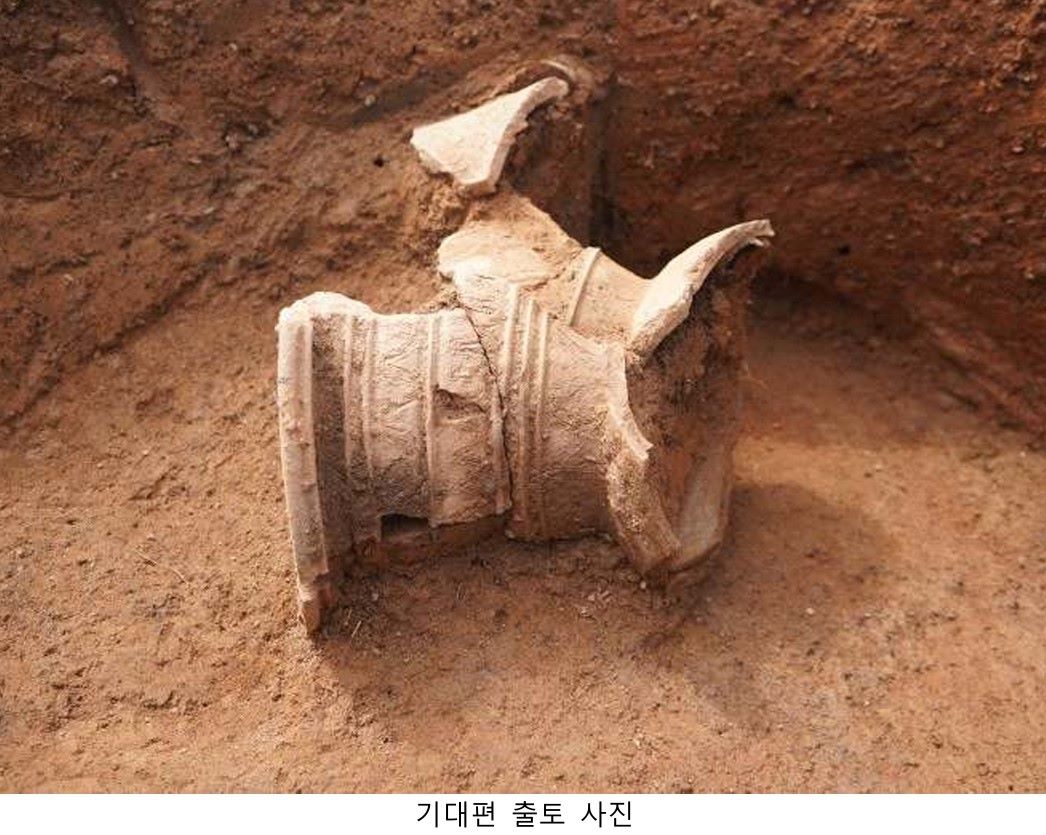
Furthermore, it was finally confirmed that the No. 3 tomb was constructed only as a tomb mound without a separate burial chamber (stone chamber tomb or stone cist tomb). This signifies the creation of a large-scale 'ritual burial ground' that extends beyond a simple tomb. Fragments of pottery vessels were unearthed in the central part of the tomb mound, and traces of pottery offerings along the southern edge of the tomb mound were also found, reaffirming the elaborate and grand ritual practices that were continuously carried out during the construction of the tomb mound.
마한 최대급 분구묘 「고창 봉덕리 고분군 3호분」 남·북쪽 구간 축조기술 확인
국가유산청은 고창군과 함께 ‘고창 봉덕리 고분군 3호분’(이하 ‘3호분’) 3차 발굴조사 성과를 일반 국민에게 공유하기 위해 14일 오후 1시 현장 공개회를 개최했다.
남북 약 78m, 동서 약 68m, 높이 약 8.8m에 달하는 장방형 구조인 ‘3호분’은 마한 50여 소국 중 고창 일대에 기반을 두었던 ‘모로비리국’의 전통을 이은 세력의 압도적인 위상과 지배 권력을 상징하는 핵심유적이다. 마한 분구묘 중 국내 최대급 규모를 자랑하는 동시에 고도의 마한 토목기술을 보여주는 매우 중요한 유적으로 평가된다.
모로비리국(牟盧卑離國)은 「삼국지」 위서 동이전에 따르면 삼한 시대 마한 54개 소국 중 하나로, 현재의 전북 고창군 일대에 위치했던 고대 국가다.
이번 3차(2026년) 발굴조사에서는 기존 1차(2023년), 2차(2024년) 발굴조사를 통해 고분의 사면부 성토 양상과 외곽 시설을 확인한 것을 바탕으로, 더 나아가 마한 최대급 분구묘의 성격과 축조기술을 밝히는 중요한 성과를 거뒀다.
특히 국내 최초로 토낭 격자망과 성벽 축조 공법이 융합된 초대형 고분 축조기술을 확인하였다.
구체적으로 살펴보면, 먼저 ▲ 북쪽 구간은 가장자리에 토제(흙으로 쌓은 둑)를 견고히 조성한 후, 토낭(흙자루)과 점토블록을 이용하여 일정한 간격의 방형(사각형)의 격자망을 구축하고, 이 격자망 안에 흙을 한 층씩 채워 올린 ‘격자망 구획 공법’을 사용한 것으로 확인되었다. 이와 함께, ▲ 남쪽 구간은 고분임에도 불구하고 마치 성벽의 체성부를 쌓는 방식과 유사하게 토낭벽을 수직으로 여러 겹 쌓아 올린 후 사면부를 성토한 축조 공법이 확인되었다.
이는 서로 다른 공정 기술과 작업 단위가 결합하였음을 보여주며 당시 고창 지역 지배세력이 대규모 노동력을 조직적으로 동원하고 통제할 수 있는 강력한 기반을 갖추었음을 확인할 수 있는 중요한 사례이다.
또한 3호분은 중심에 별도의 매장주체부(석실묘·석곽묘 등)가 없이 분구만 축조된 것을 최종 확인하였다. 이는 단순한 무덤을 넘어 고분군 전체를 아우르는 대규모 ‘의례적 묘역’이 조성되었음을 의미한다. 분정 중앙부에서는 발형기대(그릇받침) 조각이 출토되었고, 남사면 분구 가장자리를 따라 토기가 매납되었던 흔적도 확인되어 분구 축조 과정에서 정교하고 거대한 제의 행위가 지속적으로 수반되었음을 재확인하였다.